

Flat & Low-Slope Roofing Guide for Myrtle Beach, SC Property Owners
Flat and low-slope roofing systems are common on commercial buildings, offices, retail spaces, warehouses, apartment properties, additions, porches, and some modern-style homes. While these roofs may look simple from the ground, they require specialized materials, drainage planning, and maintenance to perform properly over time.
For property owners in Myrtle Beach, SC, flat and low-slope roofing systems face additional challenges from heavy rain, coastal humidity, tropical storms, hurricane season, strong sun exposure, and sudden downpours. Because these roofs do not shed water as quickly as steep-slope roofs, even small drainage or membrane issues can turn into bigger problems if not addressed early.
This guide explains what flat and low-slope roofing is, how these systems work, the most common flat roof problems, the differences between TPO roofing, EPDM roofing, and modified bitumen roofing, and when repair or replacement may be needed.
This guide applies to property owners throughout Myrtle Beach, North Myrtle Beach, Conway, Carolina Forest, Surfside Beach, Socastee, Little River, Longs, Loris, Aynor, Murrells Inlet, Garden City, Georgetown, Pawleys Island, and surrounding Horry County and Georgetown County communities.
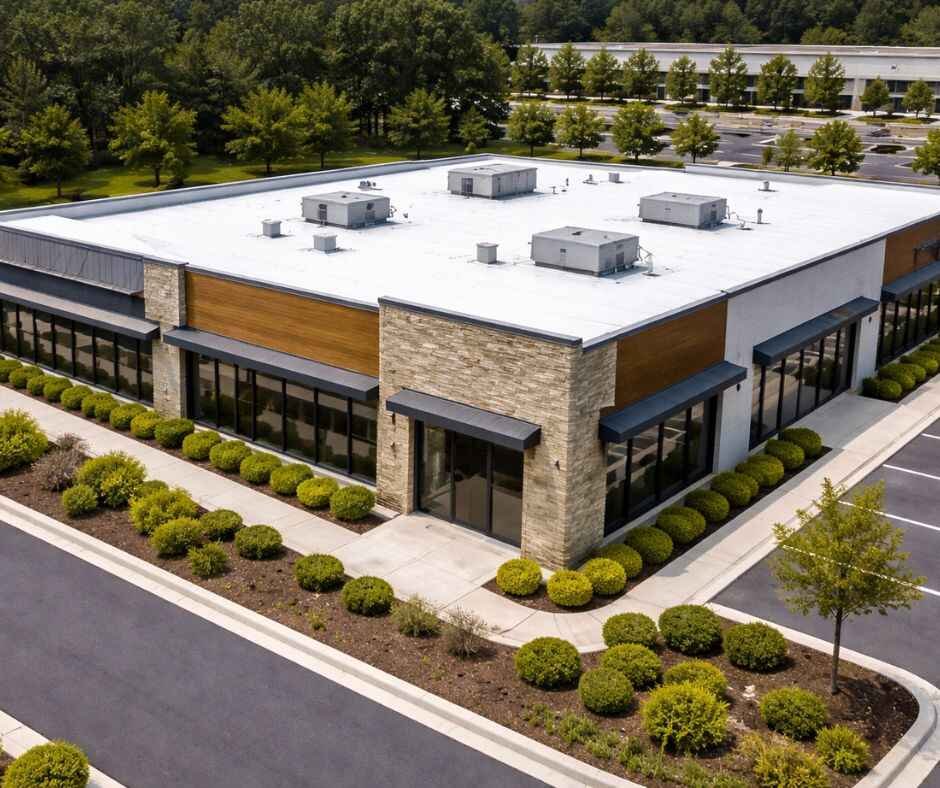
Flat and low-slope roofing system on Myrtle Beach SC commercial building with roof membrane and drainage details.
What Is Flat & Low-Slope Roofing?
Flat and low-slope roofing refers to roofing systems installed on structures with little to no visible pitch. While many people call them “flat roofs,” most are actually built with a slight slope to help water move toward drains, scuppers, or gutters.
These roof systems are commonly found on:
commercial buildings
office buildings
shopping centers
warehouses
industrial buildings
apartment complexes
porches and additions
some residential homes
Because water drains differently on these roofs than on traditional pitched roofs, flat and low-slope systems need specialized materials and professional installation.
Why Flat Roofs Require Special Attention
A flat or low-slope roof handles weather differently than a steep-slope shingle roof. Water may stay on the surface longer, and drainage issues can become more serious if they are not corrected quickly.
Flat and low-slope roofing systems often require attention to:
drainage design
flashing details
membrane seams
penetrations and rooftop equipment
ponding water
storm damage
long-term waterproofing performance
This is why it is important to work with a roofing contractor who understands how these systems perform in coastal South Carolina.
Common Types of Flat & Low-Slope Roofing Systems
Several different materials are commonly used on flat and low-slope roofs.
TPO Roofing
TPO roofing is a single-ply membrane roofing system known for energy efficiency, UV resistance, and durability. It is widely used on commercial low-slope roofs.
EPDM Roofing
EPDM roofing is a synthetic rubber membrane that is commonly used on flat roofs because of its flexibility, weather resistance, and long lifespan.
Modified Bitumen Roofing
Modified bitumen roofing is an asphalt-based, multi-layer roofing system designed for strong waterproofing and durability on low-slope roofs.
Other Low-Slope Roofing Applications
Some structures may use specialized flat roof assemblies depending on building type, drainage needs, and long-term performance requirements.
TPO vs. EPDM vs. Modified Bitumen Roofing
Property owners often want to understand the differences between the most common low-slope roofing materials.
TPO Roofing Benefits
reflective surface for energy efficiency
strong UV resistance
common choice for commercial roofing
durable membrane performance
EPDM Roofing Benefits
flexible rubber membrane
durable long-term weather resistance
strong performance in a range of conditions
common on flat commercial roofs
Modified Bitumen Roofing Benefits
multi-layer waterproofing system
durable and reliable for low-slope applications
strong resistance to wear and weather exposure
The best system depends on the building, roof layout, budget, and long-term goals of the property owner.
Common Flat Roof Problems
Flat and low-slope roofing systems can develop problems that are not always obvious from the ground.
Ponding Water
Standing water that remains on the roof too long after rain can increase wear and raise the risk of leaks.
Roof Leaks
Leaks may begin around seams, flashing, penetrations, drains, or weak points in the membrane.
Membrane Damage
Punctures, tears, shrinkage, and surface deterioration can affect waterproof performance.
Seam Separation
Membrane seams can weaken over time, especially with weather exposure and movement.
Flashing Failure
Flashing around roof edges, penetrations, and walls can crack or separate, allowing water intrusion.
Drainage Problems
Blocked drains, improper slope, or overflow issues can prevent water from exiting the roof properly.
Signs a Flat or Low-Slope Roof May Need Repair
Many roofing problems start small and become worse if not caught early.
Common warning signs include:
water stains on ceilings
recurring roof leaks
ponding water after rain
visible surface bubbling or blistering
cracks at flashing or transitions
membrane separation
soft spots in the roof surface
mildew or moisture inside the building
storm-related damage after high winds or hail
If these signs are present, a professional roof inspection can help determine whether flat roof repair is enough or if replacement should be considered.
Why Ponding Water Matters on Flat Roofs
One of the most common problems on flat roofs is ponding water. This happens when water remains on the roof surface instead of draining properly.
Ponding water can:
increase leak risk
accelerate membrane wear
stress flashing and seams
add weight to the roof structure
shorten the lifespan of the roofing system
For buildings in Myrtle Beach and other Grand Strand communities, heavy rain events can make drainage problems much worse if they are not corrected.
Flat Roof Repair vs. Flat Roof Replacement
Not every flat roof problem means the whole system must be replaced.
Flat Roof Repair May Be Enough When:
damage is limited to one area
leaks are localized
the membrane is mostly intact
flashing problems are minor
the roof still has useful life remaining
Flat Roof Replacement May Be Better When:
leaks are recurring
membrane damage is widespread
ponding water has caused long-term deterioration
repairs are becoming frequent and costly
the system is near the end of its lifespan
A professional evaluation helps determine the best long-term solution.
Flat & Low-Slope Roofing for Commercial Buildings
Flat and low-slope roofs are especially common on commercial properties. These systems are widely used on:
office buildings
warehouses
retail centers
industrial buildings
restaurants
churches
apartment complexes
mixed-use commercial buildings
Because these properties often have larger roof surfaces and more drainage complexity, regular inspections and professional maintenance are especially important.
How Coastal South Carolina Weather Affects Flat Roofs
Property owners in Myrtle Beach, North Myrtle Beach, Conway, Carolina Forest, Surfside Beach, Murrells Inlet, Garden City, Georgetown, and Pawleys Island deal with conditions that place added stress on flat roofs.
These include:
heavy rain
tropical storms
hurricane season
coastal winds
high humidity
intense sun exposure
wind-driven rain
Because flat roofs hold water differently than steep-slope roofs, these local weather conditions make inspections, repairs, and proper material selection especially important in Horry County and Georgetown County.
Why Flat Roof Inspections Matter
Routine inspections help property owners catch small problems before they become major repairs.
A flat roof inspection can help identify:
drainage issues
membrane wear
seam failure
flashing damage
punctures
storm-related damage
early leak points
This is especially important after storms, heavy rain, or visible signs of moisture intrusion.
Why Call On Point Exterior Services for Flat & Low-Slope Roofing?
On Point Exterior Services is a family-owned exterior contractor based in Myrtle Beach, SC, proudly serving homeowners and businesses throughout Horry County and Georgetown County.
We provide help with:
flat roof repair
flat roof replacement
low-slope roof installation
TPO roofing
EPDM roofing
modified bitumen roofing
commercial roofing
roof inspections
storm damage roofing
We also provide:
roof repair
roof leak repair
roof replacement
emergency roof repair
metal roofing
seamless gutters
gutter repair
siding installation and replacement
Our team understands how flat and low-slope roofs perform in coastal South Carolina and helps property owners choose practical, long-term solutions.
Flat & Low-Slope Roofing FAQs
What is the difference between a flat roof and a low-slope roof?
A flat roof has very little visible pitch, while a low-slope roof has a slight slope to improve drainage. Both require specialized roofing systems.
What is the best roofing material for a flat roof?
That depends on the building and goals, but common options include TPO roofing, EPDM roofing, and modified bitumen roofing.
How often should a flat roof be inspected?
Flat roofs should be inspected regularly, especially after storms and heavy rain, because drainage and membrane issues can develop quickly.
Why does ponding water matter on a flat roof?
Ponding water increases leak risk and can shorten roof life by adding stress and accelerating material wear.
Can flat roofs be repaired instead of replaced?
Yes. Many flat roofs can be repaired if the damage is localized and the system still has useful life remaining.
Are flat roofs only for commercial buildings?
No. While they are common on commercial buildings, some homes, additions, porches, and modern-style structures also use flat or low-slope roofing systems.
Related Roofing and Exterior Services
On Point Exterior Services also provides:
Serving Myrtle Beach, North Myrtle Beach, Conway, Carolina Forest, Surfside Beach, Socastee, Little River, Longs, Loris, Aynor, Murrells Inlet, Garden City, Georgetown, Pawleys Island, and surrounding Grand Strand communities.
On Point Exterior Services of Myrtle Beach - Call or Text Us: (843) 315-9244